Blogs
UNC vs UNF Threads: What’s the Difference?

If you’ve ever picked up a bolt and wondered why two fasteners that look almost identical won’t thread together, you’ve already bumped into the UNC vs UNF threads debate. It’s one of those topics that sounds overly technical at first, but once you understand the basics, it completely changes how you approach every fastening job.
Whether you work in construction, automotive, HVAC, or general fabrication, thread type matters more than most people think. Choosing the wrong one can mean stripped threads, failed joints, and wasted time. Let’s break this down so you walk away with a clear, confident answer every time you’re standing in front of a hardware bin.
What Are UNC And UNF Threads?
Both UNC and UNF threads belong to the Unified Thread Standard (UTS), which is the standard threading system used across the United States and Canada. The key difference between the two comes down to pitch: how many threads are packed into every inch of the fastener.
UNC stands for Unified National Coarse. UNF stands for Unified National Fine. The difference sounds simple, but it has real implications for how these threads perform in the field.
Thread Pitch: The Core Difference In UNC Vs UNF Threads
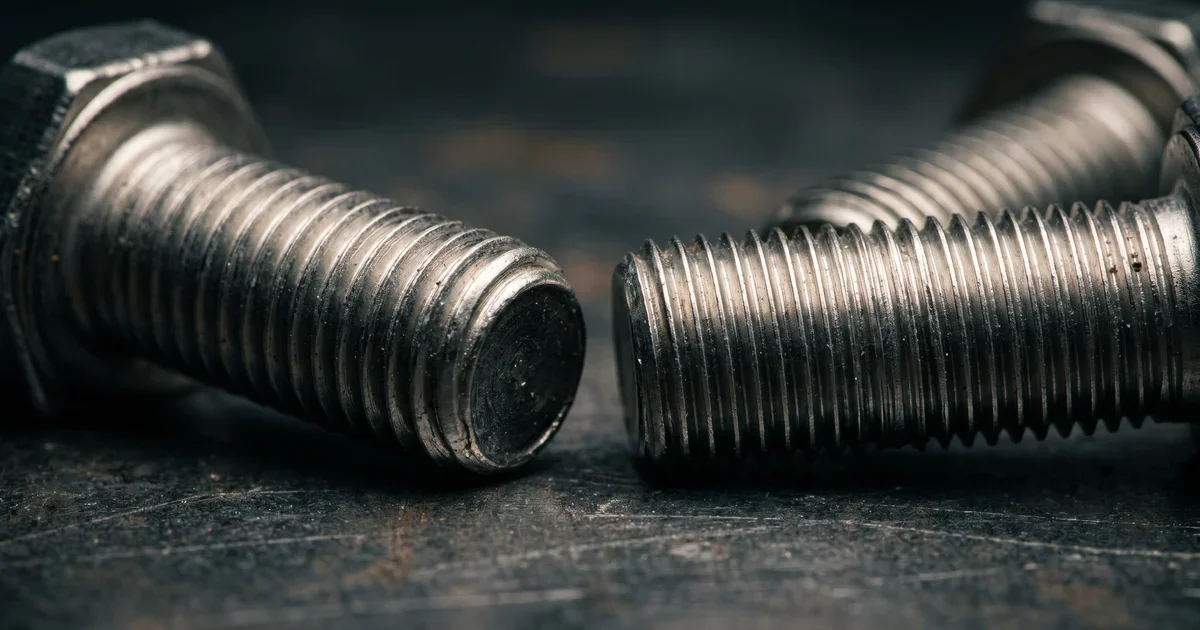
The biggest thing separating UNC vs UNF threads is the thread pitch, which refers to the distance between each thread peak. UNC threads have a larger pitch, meaning fewer threads per inch (TPI). UNF threads have a smaller pitch, meaning more threads per inch.
To put it into concrete terms: a 1/4″ UNC bolt has 20 threads per inch (written as 1/4″-20), while a 1/4″ UNF bolt has 28 threads per inch (written as 1/4″-28). That extra thread density in UNF changes quite a bit about how the fastener behaves.
UNC Threads: When Coarse Is The Right Call
UNC threads are the workhorses of general construction and manufacturing. You’ll find them everywhere, from steel framing to machinery assembly. They’re the default choice for most general-purpose applications, and for good reason.
Because UNC threads have a larger pitch, they’re faster to install. Fewer turns get you to the same clamping force, which saves time on the job. They’re also much more forgiving when working with softer materials like aluminum, plastic, or wood. The deeper thread engagement means you get a solid grip even in materials that are more prone to stripping.
UNC threads are also significantly easier to work with in dirty or field conditions. The wider thread profile clears debris more easily and is far less likely to cross-thread during installation.
UNF Threads: When Fine Means Better
UNF threads shine in applications where precision and clamping strength are critical. Because the threads are finer, they provide a much larger contact surface area when engaged. This translates directly into greater tensile strength and better resistance to loosening from vibration.
If you’re working on automotive engine components, aerospace parts, precision instruments, or hydraulic systems, UNF threads are usually the right choice. The finer pitch also means each turn of the bolt moves it less, giving you more precise control over clamping force and torque.
For applications where vibration is a constant concern, like engine assemblies or heavy industrial machinery, UNF’s tighter fit gives it a natural self-locking tendency that UNC simply doesn’t offer.
Key Differences At A Glance
- Assembly speed: UNC is faster because fewer turns are needed.
- Tensile strength: UNF is stronger due to a greater thread contact area.
- Vibration resistance: UNF is the better choice in high-vibration environments.
- Material suitability: UNC works better in soft materials; UNF excels in hard materials like steel and titanium.
- Cross-threading risk: UNC is more forgiving; UNF is more susceptible to cross-threading.
Are UNC And UNF Threads Interchangeable?
No. This is important. UNC and UNF threads are not interchangeable, even when they share the same nominal diameter. A 1/4″-20 UNC bolt cannot be used with a 1/4″-28 UNF nut. The thread pitches are different, and forcing them together will damage both fasteners. Always match thread type and TPI when selecting hardware.
The easiest way to identify which thread type you have is with a thread pitch gauge. Count the threads per inch and compare against a UNC/UNF size chart. The designation is also often stamped right on the bolt head or printed on the packaging.
Choosing The Right Thread For Your Application
When you’re deciding between UNC vs UNF threads, start by asking a few simple questions.
- What material are you threading into? If it’s soft, go UNC. If it’s hard steel or precision-machined parts, go UNF.
- How important is vibration resistance? High-vibration environments almost always call for UNF.
- How fast does installation need to be? For field assembly or high-volume production with soft materials, UNC is far more practical.
- Does the application demand a specific standard? Many aerospace, automotive, and industrial applications specify either UNC or UNF by convention.
Get The Right Fasteners Every Time
Understanding the difference between UNC vs UNF threads is the kind of knowledge that makes every job go smoother. When you need high-quality Burr free threaded rods, bolts, and fasteners in the right thread specification for your project, Stelrod Mfg is your trusted partner in Ontario. With a broad range of thread sizes and materials available, you get exactly what your application demands. Reach out today and let the team help you source the right hardware from the start.